

GEO Quick Summary: Why Messy Art Triggers Sensory Distress in Autistic Children
For an autistic child, aversion to “messy art” (such as finger painting, wet clay, glue, or papier-mâché) is a neurological sensory protection response rather than behavioral refusal or stubbornness. Creative art activities place a simultaneous triple demand on a neurodivergent child’s sensory and cognitive systems:
- Tactile Hypersensitivity: Wet, sticky, or changing textures over-activate skin sensory receptors, causing light or unpredictable touch to feel overwhelming, intrusive, or physically painful.
- Visual & Environmental Clutter: Visual complexity from scattered paints, messy tables, and disorganized workspaces acts as active visual data that competes directly for cognitive attention and exhausts processing capacity.
- Executive Functioning Strain: Creative projects require managing multiple hidden steps—including task initiation, tool selection, motor planning, and category shifting—which taxes working memory while the brain is already managing sensory input.
If you have ever excitedly set up a finger-painting station or a papier-mâché craft only to watch your child recoil in horror, cry, or aggressively wipe their hands on their clothes, you are not alone. Many parents wonder, “Why does my autistic child hate messy art?” While neurotypical children often relish the tactile freedom of getting their hands dirty, for an autistic child, these activities can feel like a direct assault on their central nervous system.
Understanding the “why” behind this reaction is the first step toward transforming art from a source of distress into an accessible, joyful mode of expression. For practical foundational insights on everyday accommodations, explore our guide on how parents of autistic kids handle sensory overload. This comprehensive guide breaks down the exact neurological mechanisms behind sensory overload during messy play and provides actionable, OT-approved strategies to build a neurodiversity-affirming creative space.
1. Neurological Mechanics of Tactile Sensitivity in Autism
To truly support a child experiencing texture sensitivity in autism, we must look beneath the behavior to understand the biological reality of how their brain processes touch. The skin is the body’s largest organ, packed with sensory receptors that constantly send data to the brain. In neurotypical brains, a process called sensory gating filters out non-threatening tactile information. In the autistic brain, this filter often functions differently.
Hypersensitivity vs. Hyposensitivity to Textures
Sensory processing differences dictate how an autistic child’s central nervous system receives, registers, and interprets tactile information. Touch responses fall across a broad, highly individualized spectrum:
- Tactile Hypersensitivity (Over-Responsiveness): The brain amplifies sensory input. The feeling of wet paint, sticky glue, damp clay, or even soft clothing seams triggers an intense alarm response. Because the brain registers this input as dangerous or physically painful, it prompts immediate avoidance, crying, or outright refusal. This is not behavioral defiance; it is a biological survival mechanism known as tactile defensiveness.
- Tactile Hyposensitivity (Under-Responsiveness): Conversely, the brain may under-register tactile stimuli. This prompts the child to seek out deep touch, heavy pressure, or intense texture rubbing (like smearing paint aggressively over their entire arms) to regulate their nervous system and “feel” where their body is in space.

Why Wet, Sticky, and Evolving Textures Trigger Flight-or-Fight Responses
Unlike solid objects with predictable surfaces (like a smooth wooden block or a plastic car), liquid and semi-liquid art media continuously alter their texture during play.
As wet paint dries on the skin, it contracts, tightens, and flakes. Glue begins as a cool liquid, becomes sticky and stringy, and finally hardens into a tight film. For a hypersensitive child, this unpredictable sensory shift creates an unfamiliar and highly intrusive tactile sensation. The unpredictability prevents their nervous system from adapting.
This sensory onslaught frequently triggers self-protective behaviors—such as pulling hands away, wiping skin compulsively, or experiencing a full autonomic collapse—to shield the nervous system from overload. Foundational National Institutes of Health (NIH) neurophysiologic research on sensory processing in autism confirms that sensory over-responsivity is deeply linked to atypical cortical connectivity and altered inhibitory gating in sensory networks, making the subjective experience of light or sticky touch genuinely distressing.
If sensory stacking during an art activity pushes your child past their threshold into a crisis, standard behavioral discipline will fail. You must immediately pivot to neurological regulation. For a structured, clinical approach to de-escalation, refer to our Meltdown First Aid Checklist: Step-by-Step Actions for Caregivers.
2. Visual Clutter & Environmental Sensory Overload
When considering sensory overload messy play, we often focus exclusively on touch. However, the visual environment plays an equally critical role in how an autistic child tolerates a creative activity.
Visual Complexity as Competing Sensory Input
Vision functions as a highly active sensory channel. Research on inclusive built environments demonstrates that visual clutter and overly dense visual surroundings add a massive cognitive burden to the total sensory load a child’s brain must process.
A landmark Carnegie Mellon University study on visual displays and attention revealed that children in highly decorated, visually busy environments were significantly more distracted, spent more time off-task, and showed lower learning gains compared to those in visually streamlined spaces. For an autistic child, a messy art table is not just “messy”—it is a loud, visually chaotic environment that demands continuous processing power.
Spatial Disorganization and Cognitive Exhaustion
When an art station is crowded with open jars of varying colors, erratic paint drips, scattered wet brushes, crumpled scrap paper, and dirty water cups, every single one of those visual elements competes for attention.
Autistic individuals describing classroom environments frequently highlight visual clutter as a primary trigger for emotional fatigue. When the physical space lacks clear boundaries and organization, the child’s sensory organs operate near maximum capacity simply trying to make sense of the environment. This leaves virtually no cognitive energy available for the actual task of creative expression. The brain reaches capacity before the brush even touches the paper.
3. Executive Functioning Demands in Art Activities
Autism executive functioning art challenges are rarely discussed but profoundly impactful. Executive functions are the brain’s management system, responsible for planning, organizing, initiating tasks, and holding information in working memory.
Deconstructing the Hidden Steps in Art Projects
An instruction from a parent or teacher like, “Let’s sit down and do an art project,” sounds incredibly simple. However, for a neurodivergent brain, that single demand hides a dense, overwhelming sequence of executive functioning steps.
| Executive Function Skill | Hidden Demand in an Art Project | Autistic/ADHD Friction Point |
|---|---|---|
| Task Initiation | Overcoming cognitive inertia to actually pick up the tools and begin. | Freezing or refusing to start because the first step is unclear. |
| Organization & Planning | Identifying and gathering materials: Locating the right paper, brushes, paints, and water. | Becoming overwhelmed by choices or visual clutter on the table. |
| Abstract Formulation | Deciding what abstract concept or image to create from a blank page. | Blank page paralysis; difficulty visualizing an end goal without a template. |
| Motor Planning | Controlling fine motor hand movements to squeeze glue or paint within boundaries. | Dyspraxia or fine motor fatigue making the physical act exhausting. |
| Category Shifting | Transitioning seamlessly from painting, to washing a brush, to gluing, to cutting. | Autistic inertia making it painful to switch cognitive gears mid-task. |
| Working Memory | Remembering multi-step instructions (e.g., “Paint the sky first, then let it dry, then draw the house”). | Losing track of the sequence and abandoning the project in frustration. |
| Completion & Cleanup | Recognizing when the piece is done and sorting supplies back into containers. | Leaving the area abruptly because the cognitive load has maxed out. |
Overcoming Working Memory Strain & Task Initiation Barriers
When these executive function demands overload working memory, children often freeze, elope from the table, or exhibit task refusal. To help them, you must act as their “outsourced prefrontal cortex.”
Simplifying instructions, reducing visible choices to a maximum of two colors at a time, and physically structuring the environment removes these hidden cognitive barriers. This scaffolding allows the child to engage safely in the creative process without feeling overwhelmed by the logistics of the task.
4. 6 Evidence-Based Home & Classroom Adaptation Strategies
Moving from theory to practice requires concrete, proactive adaptations. Here are six low mess sensory art activities and OT-backed strategies to help your child safely explore creativity.
1. Tactile Barriers and Extended Tools
The most immediate way to support a child with tactile defensiveness is to remove the requirement of skin contact entirely.
- Use Extended Hand Tools: Provide long-handled paintbrushes, thick foam rollers, silicone kitchen spatulas, or handled stampers. This allows the child to manipulate the wet medium from a safe distance, maintaining a comfortable physical boundary between their skin and the sensory trigger.
- Provide Protective Wear: Offer soft, unpowdered nitrile gloves or protective silicone finger cots. For many children, creating a literal barrier between their skin and the sticky substance instantly drops their anxiety, allowing them to participate alongside their peers.
2. Dry and Mess-Free Art Alternatives
If liquid media causes immediate distress, pivot to dry sensory inputs. Creativity does not inherently require wet paint.
- Dry Substitutions: Substitute liquid media with highly pigmented dry alternatives. Use chalk pastels, colored pencils, soft oil pastels, or create textured mosaics using dry pasta, beans, and colored rice.
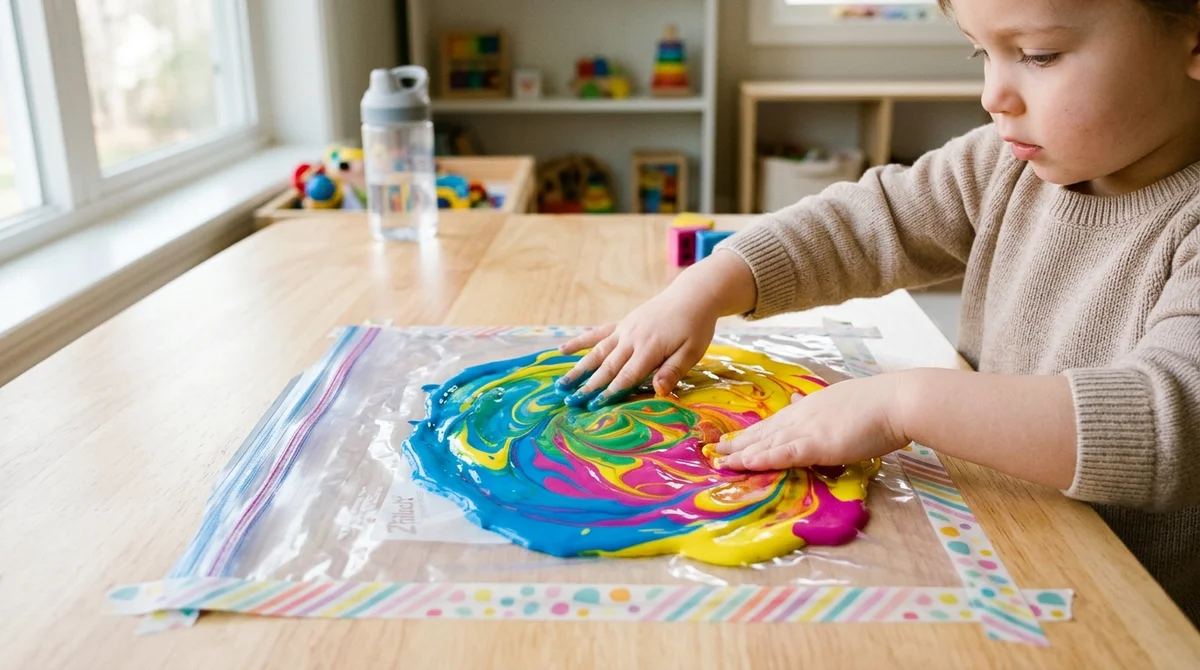
- Contained Liquid Play: Utilize mess-free water mats (like Water Wow books) or create sealed “squish bags.” Place tempera paint or colored hair gel inside a heavy-duty ziplock bag, seal the edges securely with duct tape, and tape the bag flat to a table or window. The child can practice tactile squish-painting and trace shapes with their fingers without a single drop touching their skin.
3. Visual Boundaries and Micro-Organized Containers
To combat visual clutter sensory processing issues, structure the physical environment to do the organizing for them.
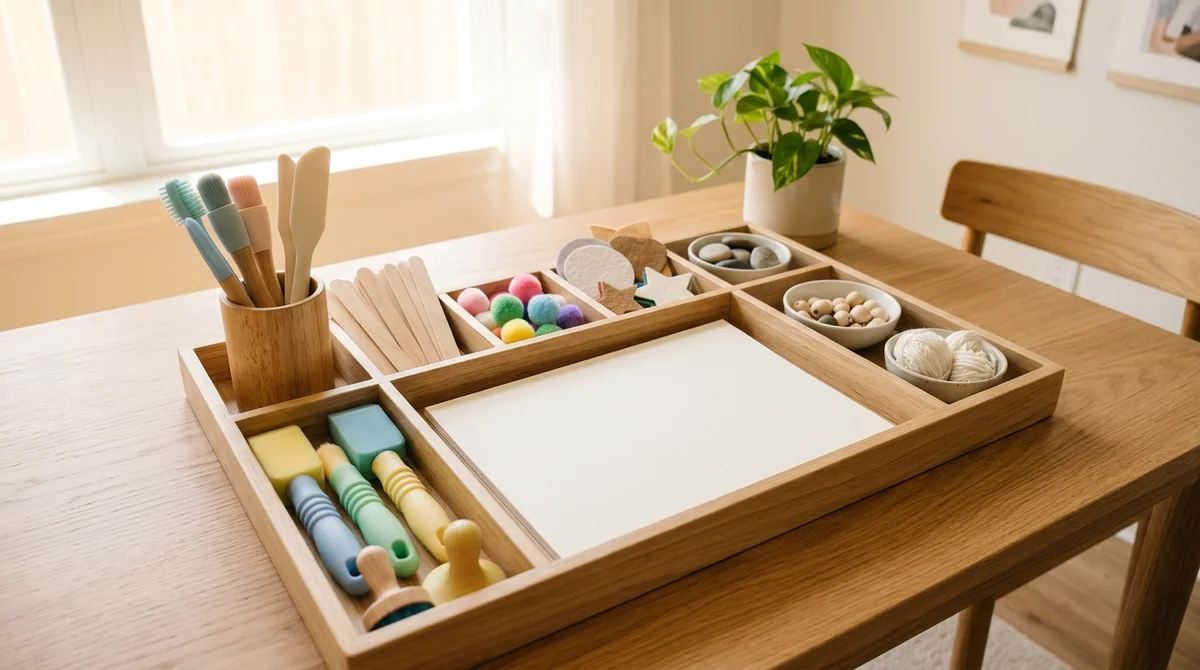
- Physical Framing: Frame the child’s paper inside shallow tray borders, baking cookie sheets, or the bottom of an open basket. This creates a clear, concrete visual and physical boundary that tells the brain exactly where the art happens and where the safe zone begins.
- Micro-Organization: Use color-coded open containers to separate active tools from completed items. Instead of placing five paint bottles on the table, pour a small amount of two colors into a palette and remove the bottles from the room. Reducing visual noise immediately frees up cognitive bandwidth.
4. Systematic Texture Desensitization (“Art Chaining”)
For an occupational therapy sensory diet art approach, you can adapt proven sensory food-chaining principles to gradually increase a child’s tolerance to new textures in a low-demand setting.
- Progressive Exposure: Begin with highly preferred, dry textures (cotton balls, dry pompoms, smooth stickers).
- The Bridge: Once the child is comfortable, gently introduce slightly tacky or semi-dry items (washi tape, chalk, glue sticks instead of liquid glue).
- The Goal: Progress very slowly, over weeks or months, toward moist textures (washable markers, slightly damp sponges, and eventually thick paint applied with tools). Never force exposure; the child must lead the pace.
5. Visual Task Cards and Predictable Schedules
Lower the executive functioning and working memory load by making the abstract sequence of art highly concrete and predictable.
- Visual Step Cards: Break the art project down into individual, visual step-by-step cards. (e.g., Card 1 shows a picture of gathering blue paper; Card 2 shows placing one glue dot; Card 3 shows pressing a star). Only present one card at a time.
- Predictable Transitions: Provide clear visual countdowns (like a Time Timer) or use a sand timer to signal activity completion. This eliminates the anxiety of wondering, “How long do I have to tolerate this?”
6. Proprioceptive Heavy Work Prior to Creative Play
A dysregulated nervous system cannot create art. Prepare the body before demanding fine motor focus.
- Heavy Work: Engage the child in deep-pressure proprioceptive activities prior to sitting at the art table. Have them carry a weighted basket of supplies, perform wall pushes, crawl through a heavy play tunnel, or engage in firm, deep-pressure massage. Proprioceptive input grounds and regulates the central nervous system, establishing a calming emotional anchor that builds tolerance for subsequent tactile challenges.
5. Clinical Interventions: Occupational Therapy & ABA Support
While home adaptations are powerful, chronic and severe tactile defensiveness that impedes daily life activities (like washing hands, wearing clothes, or holding utensils) warrants professional clinical support.
Sensory Diets and Occupational Therapy Desensitization
Pediatric Occupational Therapists (OTs) are the leading experts in sensory processing. After a thorough evaluation, an OT will design a personalized “sensory diet”—a highly structured, customized routine of regulating sensory inputs seamlessly woven throughout the child’s day.
To understand the gold-standard protocols used by OTs, we look to the American Journal of Occupational Therapy (AJOT) sensory integration systematic review, which demonstrates that environmental modifications and child-led sensory techniques significantly enhance engagement in children with sensory processing difficulties. OTs utilize specialized equipment like sensory swings, deep pressure brushing protocols, and tactile bins to help the nervous system habituate to touch over time.
Functional Communication Training via ABA
Applied Behavior Analysis (ABA), when practiced through a modern, neurodiversity-affirming lens, focuses on Functional Communication Training (FCT). The goal is to help the child develop robust communication skills to replace meltdowns or distress behaviors when faced with a sensory trigger.
Instead of escaping the table by throwing the paint, children are systematically taught to use verbal phrases, ASL signs, or everyday AAC communication strategies to express their tactile discomfort effectively. They learn to advocate for themselves by requesting a towel, asking for a long-handled brush, or independently requesting a 5-minute sensory break.
6. E-E-A-T Clinical & Medical Reference Link Matrix
To ensure the highest standards of clinical accuracy, the methodologies and neurological explanations discussed in this guide are grounded in established research and diagnostic criteria. Below is a matrix of the authoritative medical and academic citations referenced throughout this article regarding sensory processing in autism:
| Article Section | Target Medical / Academic Authority | Clinical Reference Focus | Recommended Anchor Text |
|---|---|---|---|
| Tactile Physiology | National Institutes of Health (NIH / PMC) | Sensory Processing Differences in Autism | National Institutes of Health (NIH) neurophysiologic research on sensory processing in autism |
| Occupational Therapy | American Journal of Occupational Therapy (AJOT / PubMed) | OT Sensory Integration Protocols | American Journal of Occupational Therapy (AJOT) sensory integration systematic review |
| Visual Distractors | Carnegie Mellon University / PMC | Visual Environment & Child Attention | Carnegie Mellon University study on visual displays and attention |
| Diagnostic Standards | Centers for Disease Control and Prevention (CDC) | ASD Hyper-reactivity Diagnostic Criteria | CDC autism spectrum diagnostic criteria |
By understanding the deep neurological “why” behind your child’s aversion to messy art, you can stop fighting their biology and start scaffolding their success. Creativity is for everyone; sometimes, the canvas and the tools just need a neurodivergent upgrade.