
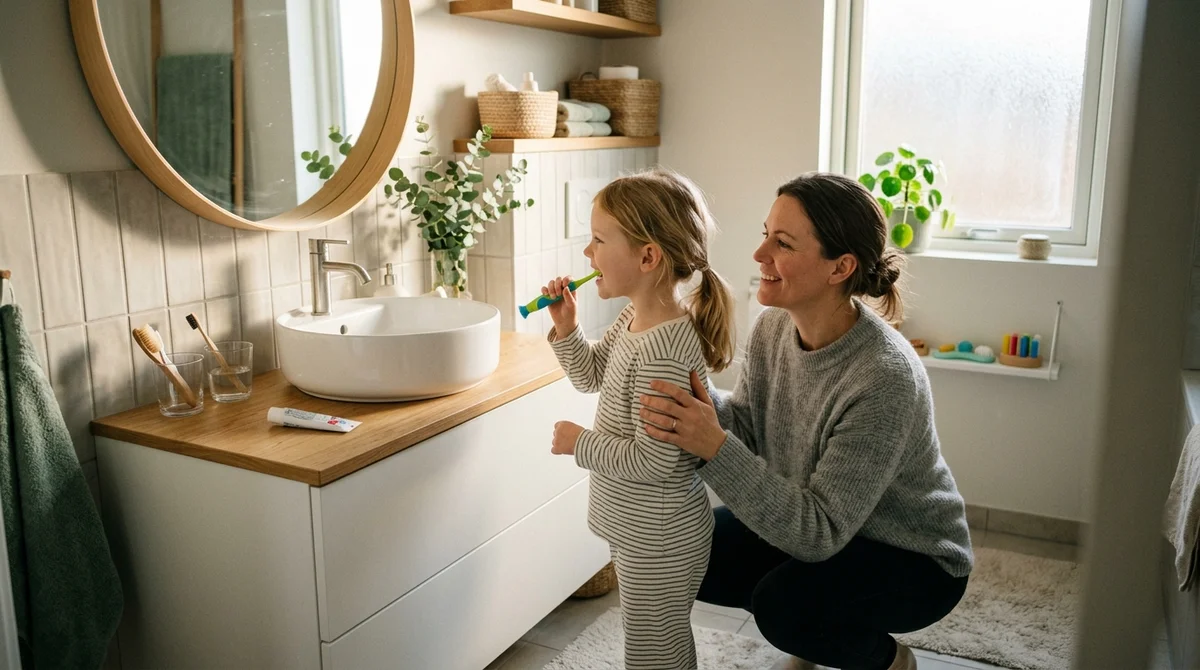
By Med Ka | Reviewed by the Med Ka Editorial Team · Last Updated: October 2026
Quick-Summary: Key Takeaways
- Sensory Adjustments: Switch to a non-foaming or flavor-free toothpaste for autism to eliminate burning mint sensations, and use an extra-soft micro-bristle toothbrush.
- Motor Accommodations: Support dyspraxia with chest-support ergonomic positioning, and master manual brushing techniques before introducing electric toothbrushes.
- Executive Cues: Provide predictable 5-minute transition warnings and pair brushing with visual timers or song sequences to reduce task-switching friction.
- The Emergency Fallback: When sensory stress peaks, rely on a wet toothbrush without toothpaste—a strategy widely endorsed by pediatric dentists over skipping oral hygiene entirely.
Few daily routines provoke as much dread for neurodivergent families as morning and evening toothbrushing. If you have ever wrestled a screaming child into the bathroom, held their head while dodging kicks, or watched them dissolve into a full-body panic attack over a pea-sized dab of toothpaste, you have likely asked yourself: how do you brush an autistic child’s teeth without a meltdown?
You are not alone, and your child is not simply being defiant. For children on the autism spectrum, oral hygiene is not merely a grooming habit; it is a neurological sensory assault. Understanding how to transform this daily struggle into a calm, cooperative routine begins by recognizing the biological realities at play inside your child’s mouth.
Reframing Resistance: Why Toothbrushing Is a Sensory and Motor Minefield
When figuring out how to brush autistic child teeth without meltdown situations, parents must first reframe the behavior. Toothbrushing refusal is almost always rooted in sensory, motor coordination, or communication barriers rather than intentional disobedience. As pediatric clinical directors at specialized neurodevelopmental clinics emphasize, caregivers must view a child’s refusal to brush their teeth as a “can’t do” rather than a “won’t do.”
According to clinical guidance from the National Institute of Dental and Craniofacial Research (NIDCR), children with developmental conditions experience heightened rates of oral hypersensitivity, hyperactive gag reflexes, and motor coordination challenges that make traditional dental hygiene profoundly uncomfortable.
The 6 Core Sensory and Motor Triggers
Before changing your routine, conduct a root-cause audit across these six common neurodivergent friction points:
- Taste, Flavor & Chemical Texture: Traditional commercial toothpastes feature sharp artificial mint flavors that register as burning or painful to hypersensitive tastebuds. Furthermore, chemical foaming agents (such as Sodium Lauryl Sulfate) trigger intense gagging reflexes in many autistic children.
- Tactile Bristle Sensation: The physical sensation of stiff nylon bristles vibrating against tender oral tissues and sensitive gums can trigger immediate tactile defensiveness.
- Dyspraxia & Fine Motor Control: Children with dyspraxia or fine motor coordination challenges struggle with the mechanical demands of brushing—gripping a narrow handle, angling the brush to reach posterior molars, and spitting without swallowing.
- Heightened Oral Pain Sensitivity: For children with hyperesthesia, the mechanical friction of normal brushing feels less like tickling and more like sandpaper against open wounds.
- Executive Function Demands: Brushing teeth is not a single action; it is a complex, multi-step sequence requiring planning, working memory, spatial orientation, and self-monitoring. These executive demands easily overwhelm an already fatigued brain at the end of the day.
- Transition & Task-Switching Friction: Abruptly stopping an engaging, highly preferred activity to enter a brightly lit bathroom for an invasive physical task triggers acute psychological anxiety and behavioral resistance.
These intense oral sensitivities mirror the tactile oral-motor challenges explored in our clinical guide on how to help an autistic child with sensory eating issues, where gradual desensitization and zero-pressure pacing protect the child from sensory overload.
A Step-by-Step Sensory-Friendly Routine for Stress-Free Brushing
Establishing a predictable daily rhythm is the cornerstone of successful autistic child oral hygiene. Neurodivergent children thrive on environmental predictability. Brushing at the exact same time, in the exact same location, with identical tools creates durable neural comfort over time.
Phase 1: Pre-Brushing Preparation & Transition Support
Transitioning into the bathroom is frequently where meltdowns originate. To eliminate transition shock:
- The 5-Minute Runway: Give clear, consistent 5-minute and 2-minute verbal warnings before concluding playtime.
- Empowering Micro-Choices: Offer structured autonomy: “Do you want to use the blue toothbrush or the yellow one tonight?” or “Do you want to brush before or after your pajamas?”
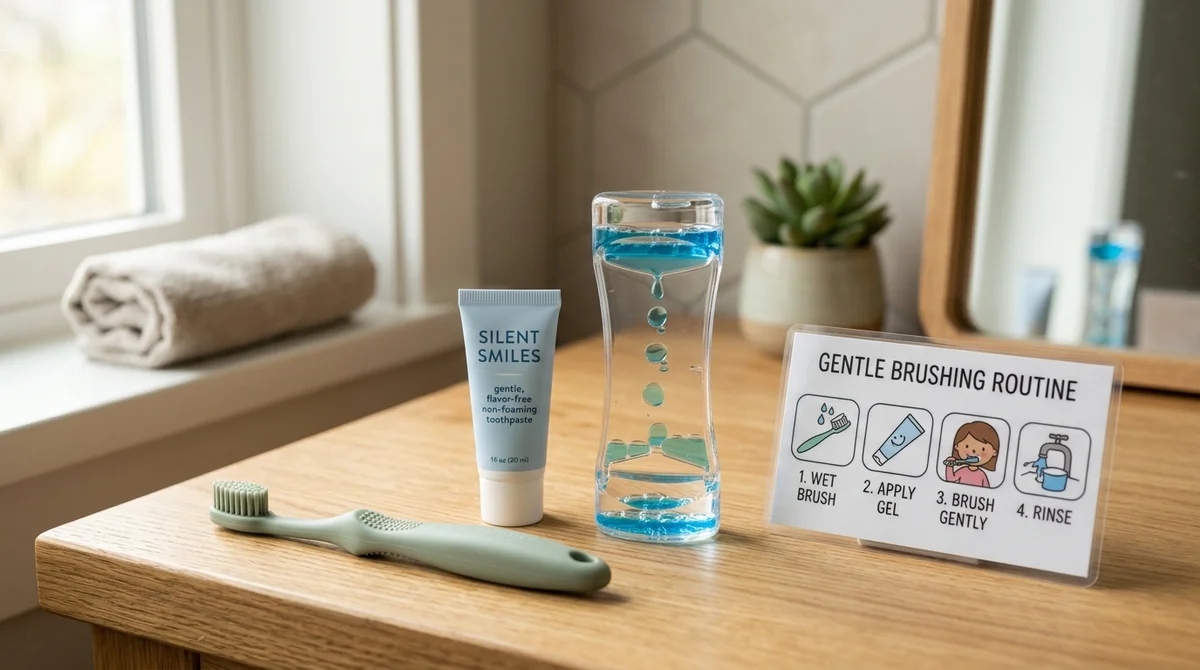
- Visual Timers: Utilize liquid visual motion timers or a favorite 2-minute song to provide an external, predictable finish line for the task.
Phase 2: Ergonomic Positioning & Nervous System Co-Regulation
If your child requires hands-on assistance, conventional face-to-face hovering can feel physically trapping and adversarial.
- Chest-Support Positioning: Position yourself comfortably behind your seated child. Allow them to lean their head back securely against your chest while you gently guide the brush from above. This provides deep proprioceptive pressure, stabilizing their vestibular system and preventing sudden defensive jerking.
- Side-by-Side Modeling: Brush your own teeth alongside your child in front of the mirror, demonstrating slow, gentle motions that your child can mirror at their own speed.
Phase 3: Pacing, Motor Modifications, and the “Wet Brush” Fallback
Break the brushing ritual down into tiny, manageable micro-steps: wetting the brush, touching the front teeth, resting, and then brushing the chewing surfaces.
If your child hits a sensory wall due to paste intolerance, pediatric dentists widely agree: just use a wet toothbrush. Brushing mechanically with warm water removes the vast majority of dental plaque. Utilizing a wet brush preserves the daily habit and protects your relationship without triggering sensory panic. As clinical research published by the National Institutes of Health (NIH) on sensory oral health in autism highlights, maintaining consistent mechanical plaque removal is far more critical for caries prevention than forcing chemical pastes that incite daily trauma.
Phase 4: Incremental Reinforcement
Celebrate micro-successes immediately. Whether through a high-five, a sticker chart, or genuine praise, rewarding small steps builds self-efficacy and teaches children that they can safely navigate hard sensory challenges.
When sensory friction peaks during personal hygiene routines, understanding how parents of autistic kids handle sensory overload provides actionable crisis de-escalation strategies to soothe an overstimulated nervous system.
The Sensory Dental Toolkit: Products That Actually Work
Building a tailored sensory kit eliminates the physical pain points of dental hygiene:
| Sensory / Motor Barrier | Recommended Product Solution | Why It Works |
|---|---|---|
| Gag Reflex & Mint Aversion | Non-foaming toothpaste for autism (Orajel fluoride non-foaming) or flavor-free toothpastes (Jack N’ Jill, Hello, Dr. Bob). | Removes burning menthol and eliminates the choking sensations caused by sodium lauryl sulfate foam. |
| Gum Pain & Bristle Defensiveness | Extra-soft micro-bristle brushes (with 10,000+ ultra-fine velvet bristles) or triple-sided wrap brushes. | Distributes mechanical friction evenly, eliminating bristle sharpness and speeding up brushing time. |
| Dyspraxia & Weak Grip | Ergonomic silicone grip adapters or wide-handled manual brushes. | Reduces fine motor fatigue, allowing children with coordination hurdles to maintain control. |
| Executive Overwhelm & Time Anxiety | Visual liquid sensory timers or visual routine cards with checkmarks. | Eliminates time ambiguity and breaks the task into visible, achievable increments. |
Crucial Maintenance Tip: Dense micro-bristle toothbrushes can trap residual toothpaste near the base of the bristles. Rinse them thoroughly under hot water after every use and replace them every 6 to 8 weeks to maintain optimal oral hygiene.
Navigating Professional Dental Visits Without Trauma
Transitioning from at-home success to a clinical dental office requires proactive planning. Preventive pediatric guidelines from the Centers for Disease Control and Prevention (CDC) on children’s oral health highlight that establishing a regular dental home early in childhood drastically reduces dental anxiety and preventable decay.
What to Look for in a Neurodiversity-Affirming Dental Clinic
- Sensory Pre-Visits (Desensitization Shadowing): Look for pediatric practices that allow your child to tour the clinic, sit in the dental chair, and inspect the tools days before an actual cleaning takes place.
- Sensory Accommodations: Inquire whether the office provides weighted x-ray aprons for calming proprioceptive input, sunglasses to dim glaring operatory lights, and noise-canceling headphones to muffle the ultrasonic scaler.
- Lifelong Care Continuity: Whenever possible, seek pediatric practices affiliated with comprehensive academic hospital programs (such as university dental schools or hospital dental clinics) that serve both children and adults with developmental differences, avoiding traumatic transitions when your child turns 18.
If dental resistance ever triggers an explosive fight-or-flight crisis, reviewing our clinical blueprint on how to stay calm during your child’s meltdown helps caregivers protect their own nervous system while keeping their child safe.
Frequently Asked Questions
Is an electric or manual toothbrush better for an autistic child?
It is almost always best to master a manual extra-soft toothbrush first. The unexpected motor vibration and buzzing sound of electric toothbrushes can easily overstimulate a sensory-sensitive child. Once a manual routine is comfortable, you can introduce a gentle sonic vibration brush with soft silicone bristles.
What if my child swallows toothpaste or completely refuses fluoride?
If your child cannot reliably spit, use a microscopic rice-grain smear of fluoride paste, or opt for a safe-to-swallow fluoride-free paste. If all pastes are rejected, brush thoroughly with warm water alone. Pediatric dental research documented in the National Library of Medicine on special-needs dentistry affirms that mechanical brushing with water provides excellent plaque control without causing psychological distress.
What should I do if my child is in the middle of an active meltdown during brushing?
Never force toothbrushing during an active nervous system meltdown. When a child is trapped in a primal fight-or-flight crisis, forced oral intervention can cause physical injury and generate lasting dental trauma. Step back, lower the lights, co-regulate, and allow their nervous system to recover. You can gently try again later or resume the following morning. To safely navigate these acute sensory overload episodes during daily routines, keep our free printable Meltdown First Aid Checklist nearby for clinical de-escalation steps that prioritize physical safety and dignity.