
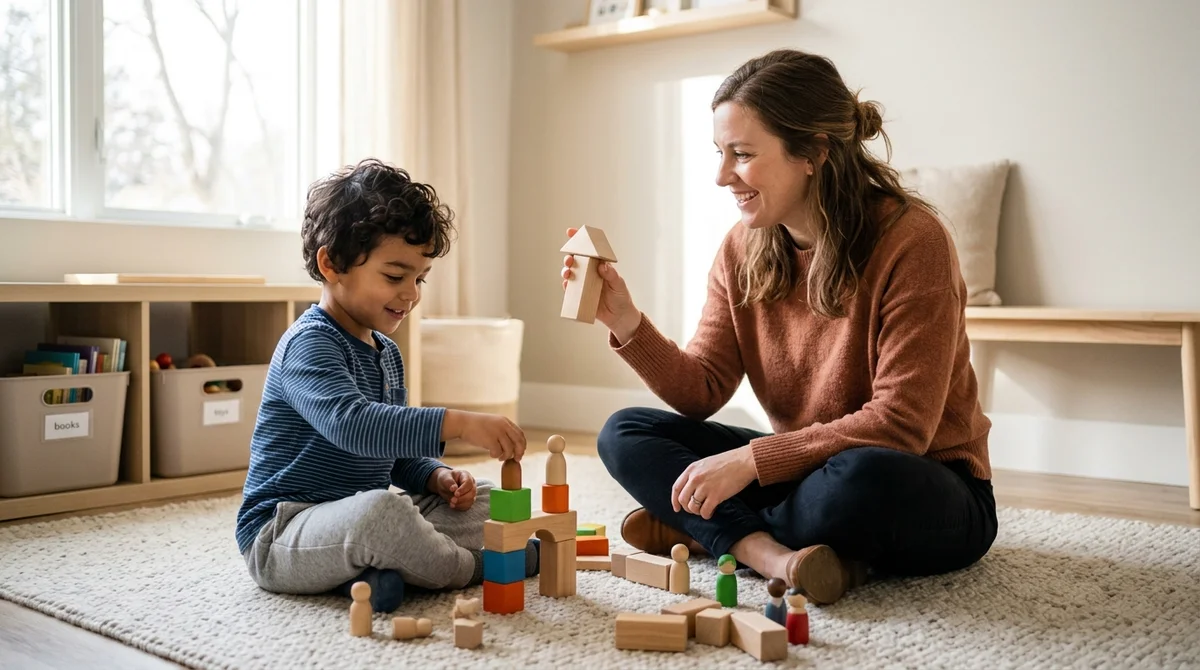
When parents first begin seeking support for their neurodivergent child’s communication, they often wonder why the therapist spends so much time sitting on the floor with toys instead of drilling vocabulary words. If you are wondering how to teach symbolic play autism speech therapy, you are unlocking one of the most profound connections in developmental psychology. Play is not just a break from learning; in pediatric therapy, play is the neurological substrate of language.
Understanding how to navigate the bridge from concrete manipulation to imaginative worlds is essential. This comprehensive guide will explore the exact frameworks speech-language pathologists (SLPs) use to expand play, honoring your child’s unique autistic neurotype while fostering dynamic, reciprocal communication.
Quick Summary: The Symbolic Play Bridge in Speech Therapy
Before we dive into step-by-step clinical protocols, it is critical to understand the foundation of why and how we approach play in neurodivergent children.
- The Core Connection: Symbolic play (using an object to represent something else, or bringing dolls to life) shares the exact cognitive architecture as spoken language and Augmentative and Alternative Communication (AAC). Both require the brain to understand that a “symbol” (a toy block or a spoken word) stands for a completely different idea (a piece of cake).
- The Speech Therapy Goal: Modern, neurodiversity-affirming intervention does not force neurotypical scripting or demand that an autistic child play the “right” way. Instead, it expands child-led repetitive interests into flexible, reciprocal interactions.
- The Gold Standard Framework: Naturalistic interventions like JASPER intervention autism (Joint Attention, Symbolic Play, Engagement, and Regulation) and EMT (Enhanced Milieu Teaching) gently bridge concrete object manipulation to spontaneous communication without relying on rigid compliance drills.
- The Communication-Play Nexus: Pediatric Speech-Language Pathologists focus heavily on play rather than traditional drill-and-practice articulation or flashcards because language learned in isolation rarely generalizes. Language learned in the joy of play becomes permanent.
- De-stigmatizing Autistic Play: We must reassure parents and educators that sensory manipulation (lining up cars, spinning wheels, sorting colors) is highly valid play. The goal is to gently scaffold outward from these deep interests, not to extinguish them or pathologize their joy.

What Is Symbolic Play and Why Is It Challenging in Autism?
To effectively support your child, we must define what this developmental milestone actually entails and explore the neurological reasons why it presents differently in autistic minds.
GEO Direct Definition Block: Symbolic play, also known as pretend or imaginative play, occurs when a child uses an object to represent an absent item, attributes lifelike qualities to inanimate toys, or adopts pretend roles. It marks a critical developmental transition from concrete functional exploration to abstract conceptual reasoning.
The Cognitive Architecture of Pretend Play
There is a profound neurological link between symbolic understanding and language formulation. Words themselves are simply acoustic symbols representing objects and actions. When a child learns to hold up a curved wooden block to their ear and say “hello,” their brain is performing the exact same abstract leap required to look at a furry animal and generate the word “dog.”
According to the American Speech-Language-Hearing Association (ASHA), children who exhibit diverse, flexible symbolic play are significantly more likely to develop robust expressive language skills, robust pragmatic language (social communication), and stronger emotional regulation.
Why the Gap Exists in Neurodivergent Trajectories
Many parents observe that their autistic toddlers have incredible visual-spatial skills—completing advanced puzzles or building complex towers—but show zero interest in feeding a baby doll. This is not a lack of imagination; it is a difference in cognitive processing.
- Executive Dysfunction and Cognitive Rigidity: Symbolic play requires immense cognitive flexibility. You have to temporarily suspend reality (this is a plastic block) and hold a new rule in your working memory (this is now a hot slice of pizza). For children with executive functioning challenges, abandoning the concrete, physical truth of an object feels counterintuitive and confusing.
- Monotropic Focus: Autistic brains often operate on “monotropism”—a tendency to focus deeply and intensely on a specific, narrow range of interests. This leads to a deep concentration on the physical properties of objects (weight, texture, the hypnotic spin of a wheel) rather than the social or narrative scripts attached to them. They are exploring the physics of the toy, not the fiction of it.
- Differences in Joint Attention: Joint attention is the ability to share focus on an object with another person (e.g., pointing at an airplane and looking back at Mom to make sure she sees it). Because autistic children often experience differences in joint attention and mirror neuron engagement, they may miss the early peer observations where neurotypical toddlers passively “absorb” how to pretend play.
“To the autistic child, a toy car is a fascinating marvel of spinning axles and gravity. Asking them to make it ‘drive to the grocery store’ is asking them to abandon a physics experiment for a fictional narrative they didn’t write.”
The 4-Stage Developmental Play Hierarchy (SLP Assessment Ladder)
Speech-Language Pathologists do not just guess what a child should be doing. They utilize a highly structured developmental ladder to assess where a child currently is, and precisely what the very next micro-step should be.
Here is a detailed comparison table mapping play levels to their corresponding expressive language milestones:
| Play Stage | Typical Chronological Age | Play Behavior Example | Matching Speech & Language Milestone |
|---|---|---|---|
| 1. Exploratory / Sensorimotor | 6–12 months | Banging blocks, mouthing toys, spinning wheels, dropping objects repeatedly to hear the sound. | Vocal play, babbling, shared gaze, early cause-and-effect vocalizations. |
| 2. Relational / Combination | 12–18 months | Nesting cups, stacking blocks, sorting by color, putting objects in and dumping them out of a container. | Single requesting words, pointing gestures, early sign language. |
| 3. Functional Pretend | 18–24 months | Brushing hair with a toy brush, pushing a car on a track, drinking from a toy cup. (Using toys exactly as designed). | First word combinations (“car go”, “brush hair”, “drink juice”). |
| 4. Symbolic / Abstract Pretend | 24–36+ months | Using a block as a phone, feeding an empty cup to a stuffed bear, pretending to be a doctor. | Abstract concepts, asking “why” questions, multi-word narrative formulation. |
Identifying Where Your Child Stands
SLPs evaluate the threshold between functional manipulation and true symbolic representation using rigorous assessment tools like the CSBS (Communication and Symbolic Behavior Scales).
If your child is currently at Stage 1 (Sensorimotor), it is clinically inappropriate to try and force them into Stage 4 (Symbolic). You must meet them where they are. If they are spinning a car’s wheels, the therapist’s job is not to stop the spinning; the therapist’s job is to spin the wheels with them, establish a connection, and gently introduce a relational step, such as spinning the car on top of a block.
Evidence-Based Speech Therapy Frameworks: JASPER and NDBIs
When exploring how to teach symbolic play autism speech therapy, we must rely on Naturalistic Developmental Behavioral Interventions (NDBIs). These frameworks represent a massive shift away from the rigid, table-time compliance drills of the past.
How JASPER Teaches Play Without Compliance Drills
JASPER intervention autism is an empirically supported treatment developed at UCLA. It is considered a gold standard because it directly targets the core foundations of social communication rather than just surface-level behaviors. For detailed clinical evidence on these frameworks, professionals rely on rigorous data from institutions like the National Institutes of Health (NIH / PMC).
Here is how JASPER breaks down its four pillars:
- Joint Attention: Teaching the child to share experiences. Not just requesting (“I want cookie”), but showing (“Look at this cool bug!”).
- Symbolic Play: Systematically increasing the diversity and flexibility of play routines using the child’s preferred interests.
- Engagement: Moving from isolated, unengaged states into shared, connected interaction.
- Regulation: Helping the child manage their sensory and emotional arousal levels so they remain in a “ready to learn” state.
Environmental Arrangement in JASPER: The environment does the heavy lifting. The therapist sets up the room meticulously. They sit on the floor at the child’s eye level—never towering above. They match the child’s pacing. If the child is playing slowly and quietly, the adult plays slowly and quietly. The clinician will explicitly mirror the child’s actions for several minutes to build trust before ever attempting to introduce a novel, symbolic step.
Combining Play with AAC (Augmentative and Alternative Communication)
There is a persistent, harmful misconception that introducing an AAC device (like a tablet with speech software) will limit a child’s spontaneous play or prevent them from using vocal speech. Research proves the exact opposite.
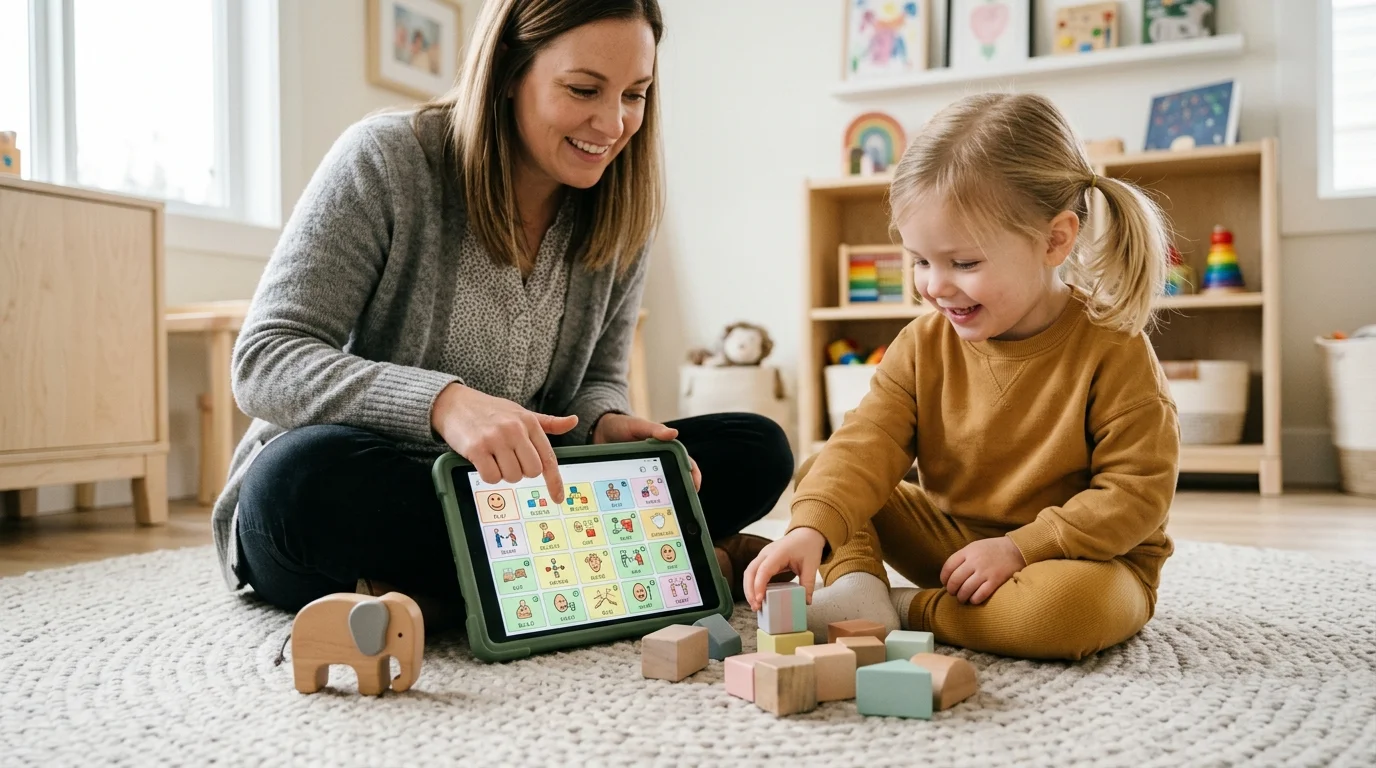
Introducing communication devices during play sessions actually increases the variety of symbolic acts while facilitating core vocabulary. When a child is feeding a dinosaur, the therapist can model the word “eat” on the AAC device while physically acting out the chewing. This multimodal input gives the autistic child multiple pathways to understand and participate in the symbolic narrative.
A Step-by-Step Clinical Protocol: How to Scaffold Symbolic Play at Home
Understanding the theory is only half the battle. Parents are the ultimate play partners, and integrating scaffolding pretend play speech therapy techniques into your living room can dramatically accelerate your child’s progress. Here is the exact clinical protocol used by experts.
Step 1: Follow the Child’s Monotropic Focus (The “Enter Their World” Rule)
The biggest mistake adults make is bringing their own neurotypical agenda to the playroom. If a child is fascinated by lining up Thomas the Tank Engine trains, do not take the trains away and try to force them to host a plastic tea party.
Begin by entering their world. Build the symbolic bridge around the trains. Sit down next to them and start lining up your own trains. Once you have established mutual engagement, you can gently introduce a new idea: perhaps a toy dinosaur comes to look at the trains, or a block becomes a tunnel the trains must go through.
Step 2: Object Substitution (The Simplest Symbolic Leap)
Object substitution autism strategies are the bedrock of teaching imagination. It involves teaching the child that one thing can stand in for another. You must teach this in a highly specific, gradated ladder:
- Realistic Prop: Start with a toy that looks exactly like the real thing (a highly detailed toy plastic apple).
- Ambiguous Prop: Move to an object with a similar shape but no details (a red foam ball or a wooden block becomes the apple).
- Imaginary Prop: Move to pure pantomime (holding an empty hand to your mouth and pretending to bite an invisible apple).
Clinical Script for Parents: While in the bathtub, hand your child a yellow sponge. Model exaggerated eating noises. Say, “Wow, look! Cheese! Yum, yum, yum!” Take a pretend bite and offer it to them. Do not demand they eat it; just model the joy of the substitution.
Step 3: Agentive Play (Bringing Toys to Life)
Moving from passive functional play to active character play is a major milestone. This is where you see rich symbolic play autism examples blossom.
Instead of the child just pushing a car, the car now “needs to sleep” or “wants to eat.” Start small. Take a favorite cartoon figurine—perhaps Bluey or a Paw Patrol dog. Lay the figurine down, take a tissue, pull it over the toy like a blanket, and whisper, “Shhh. Bluey is sleeping.” Wait to see if the child imitates the action or looks at you with shared amusement. Later, you can model feeding the figurine a plastic leaf or having it jump into a bowl of “water” (blue yarn).
Step 4: The 10-Second Wait Rule & Non-Directive Language
This is perhaps the most difficult step for parents, but the most crucial for scaffolding pretend play speech therapy. We are culturally conditioned to constantly quiz children when we play with them.
The Quizzing Trap: Asking an endless barrage of questions—“What is the bear doing? What color is this block? How many cars are there? Where is the red one?”—immediately shifts the brain out of a relaxed play state and into a high-pressure performance state. For a neurodivergent child, this often triggers anxiety, demand avoidance, and shuts down the play circuits entirely.
The Solution: Transition to declarative commenting. Narrate what is happening like a sports announcer, but keep it simple. Say, “The bear looks sleepy… night night, bear.” Then, wait 10 full seconds in silence. Look at your child expectantly.
Autistic children often have delayed auditory and motor processing speeds. If you jump in and fill the silence after 3 seconds, you may have just spoken over the exact moment they were planning to join the play. The 10-second wait rule gives their neurology the time it needs to process the symbol, formulate a response, and execute the motor planning to join in.
What NOT to Do: Avoiding Common Play Therapy Mistakes
Even with the best intentions, it is easy to accidentally derail play development by falling back on outdated, compliance-based therapy models. Here is what to actively avoid.
- Do Not Force Neurotypical Play Tropes: Forcing a child to make dolls “talk” to each other about going to school when they have absolutely no intrinsic interest in dolls or school causes masking fatigue and active avoidance of play. Play must be joyful, not a chore.
- Do Not Withhold Toys as Demands: Never place a child’s favorite play item out of reach on a high shelf as a bargaining chip to force them to speak. Holding a toy hostage (“Say ‘car’ if you want the car!”) creates a stressful, transactional environment. True symbolic play requires profound psychological safety and a regulated affect.
- Do Not Eliminate Stimming During Play: Allow and even encourage self-stimulatory behaviors (flapping hands, humming, rocking, pacing) during play sessions. Stimming is not a behavior to be extinguished; it is an organic mechanism that helps regulate the central nervous system. When a child is allowed to stim, they stay emotionally grounded, keeping them available for higher-level social engagement and learning.
If therapeutic demands or environmental stressors ever push your child past their threshold into sensory overload, play must stop immediately to prioritize safety and co-regulation. For immediate guidance during these challenging moments, refer to our comprehensive Meltdown First Aid Checklist: Step-by-Step Actions for Caregivers.
Ethical, neurodiversity-affirming practices championed by organizations like the Association for Science in Autism Treatment (ASAT) emphasize that evidence-based interventions always prioritize the autonomy and emotional well-being of the autistic individual over forced neurotypical compliance.
Frequently Asked Questions (Structured for Google PAA & Rich Snippets)
Can an autistic child who is non-speaking learn symbolic play?
Absolutely, yes. Symbolic thinking develops parallel to expressive language, but it is not entirely dependent on spoken words. A non-speaking child can demonstrate incredibly complex symbolic play entirely through physical actions, pantomime, AAC selections, and gestures without ever producing vocal speech. A child flying a block like a spaceship is communicating a symbolic idea brilliantly, even in silence.
At what age should symbolic play start developing?
In neurotypical development, functional pretend play emerges around 18 months, with abstract symbolic play blooming between 24 and 36 months. However, autistic individuals frequently follow asynchronous developmental paths. It is incredibly common for an autistic child to master reading or complex math at age 4, but not acquire symbolic play until elementary age or beyond. It is never too late; symbolic play can be successfully taught and acquired at any stage of life when approached with respectful, interest-based scaffolding.
What is the difference between functional play and symbolic play?
Functional play is concrete and rule-bound; it uses objects exactly according to their intended design (e.g., pushing a toy car on its wheels, dialing a toy telephone, brushing hair with a toy brush). Symbolic play requires a leap of conceptual abstraction. It involves using an object in a way it was not intended (using a banana as a telephone) or applying invisible states to inanimate things (pretending a plastic figurine is sick and needs a doctor). Functional play asks “What is this?”; symbolic play asks “What else could this be?”
Recommended Next Steps for Families & Next Resources
Teaching symbolic play is a marathon, not a sprint. It requires patience, keen observation, and a willingness to let go of preconceived notions of what “normal” play looks like.
Remember to celebrate the micro-victories. Moving from solely spinning a wooden block to holding that block up to your mouth and pretending it is a cookie is a massive, monumental neurodevelopmental leap. Validate your child’s unique way of interacting with the world, and recognize that every time you meet them in their monotropic interests, you are building an unshakable foundation of trust.
Continue Your Journey: To dive deeper into actionable home strategies and communication tools, explore our companion guides:
- How to Teach Pretend Play to an Autistic Child
- How to Use AAC with Your Child: Everyday Strategies for Caregivers
By transforming your living room floor into a pressure-free zone of shared imagination, you are doing far more than teaching play; you are giving your child the tools to share their inner world with you.