

Quick-Summary: Key Takeaways
- Digital-age bullying has moved from the physical schoolyard to TikTok, Discord, and AI-generated content, making traditional warning signs obsolete.
- Look for hidden signs of bullying like “reflex second-screening,” digital ghosting, and sudden physical symptoms like Sunday-night dread.
- Silence is a strategy: roughly 80% of bullied kids never report it due to fear of backlash, shame, or the fear of losing their devices.
- Immediate action requires a calm dialogue, documenting evidence (screenshot-proofing), and avoiding punitive measures like confiscating their phone.
The Modern Playground: A Silent Crisis
“The silent alarm isn’t a bruise. It’s the phone turned face-down the second you walk in.”
As parents in the digital age, identifying the 7 hidden signs your child is being bullied is more challenging than ever. According to peer-reviewed data from the National Center for Education Statistics (NCES), approximately 20–25% of students aged 12–18 experience bullying — yet only about 20% ever report it to an adult.
The problem is that harassment has migrated. It has moved from the physical schoolyard to TikTok comments, Discord servers, Snapchat streaks, and now, AI-generated content. As outlined by the federal safety initiative StopBullying.gov (U.S. Department of Health and Human Services), modern harassment frequently manifests as subtle behavioral shifts and digital withdrawal rather than obvious physical conflicts. If you want to protect your kids, you need to know what to look for. Here are the 7 warning signs of bullying that teachers and schools often miss, what each one looks like in the digital age, and exactly what to say when you spot these cyberbullying signs.
The 7 Signs at a Glance
Before diving into the specifics, here is a quick look at the warning signs of bullying in the modern era:
- The Reflex Second-Screen: Reflexively hiding or switching digital screens.
- The Group-Chat Lockout: Sudden isolation from peer group chats.
- Digital Ghosting: Abruptly deleting profiles or abandoning online platforms.
- The Midnight Scroll: Sleep disruption directly tied to late-night device usage.
- Rehearsed Mockery: Mimicking toxic language or rehearsing cruel jokes.
- Belongings That Arrive (or Vanish): Unexplained digital or physical items appearing or disappearing.
- School Avoidance & Sunday-Night Dread: Physical panic symptoms tied to school schedules.
The 7 Hidden Signs in Detail
Sign #1: The Reflex Second-Screen
- What it is: A sudden habit of phone-flicking, closing apps, or frantically switching browser tabs the moment you enter the room.
- Real-world example: Your child angles their screen away at the dinner table; they now navigate your casual room visits like a startled reflex.
- Look for this:
- Hides their screen when you walk in.
- Sleeps “beside” the phone, guarding it closely.
- Avoids showing you any new app or message.
Try saying: “I’ve noticed you switch screens when I come near. That’s making me worried — what’s happening on there?”
Hidden screens are the new hidden bruises.
Sign #2: The Group-Chat Lockout
- What it is: Being suddenly removed from friend group chats, or conversely, obsessively checking the same chat all evening with rising anxiety.
- Real-world example: The group chat that simply “vanished.” Your child is suddenly isolated inside the biggest social circle they have.
- Look for this:
- Mentions of “the chat” completely stop.
- Checking the phone and then putting it down looking deflated.
- Sudden, heavy silence about friends they used to talk about daily.
Try saying: “I noticed you’ve been really quiet about your group chat. Has something happened in your circle?”
Exclusion in 2026 doesn’t happen at the lunch table. It happens at 10:42 PM in a group chat.
Sign #3: Digital Ghosting
- What it is: Deleting accounts, switching to highly private modes, or abruptly abandoning platforms they once lived on.
- Real-world example: The TikTok account is suddenly made private; the favorite Discord server is left without explanation; their daily uploads pause completely.
- Look for this:
- Vanished digital content.
- Defensive answers to “Why did you delete your account?”
- Sudden, complete quiet in their online life.
Try saying: “You used to love posting and gaming online. What made you shut it down?”
When a child who lived online goes silent online, something online hurt them.
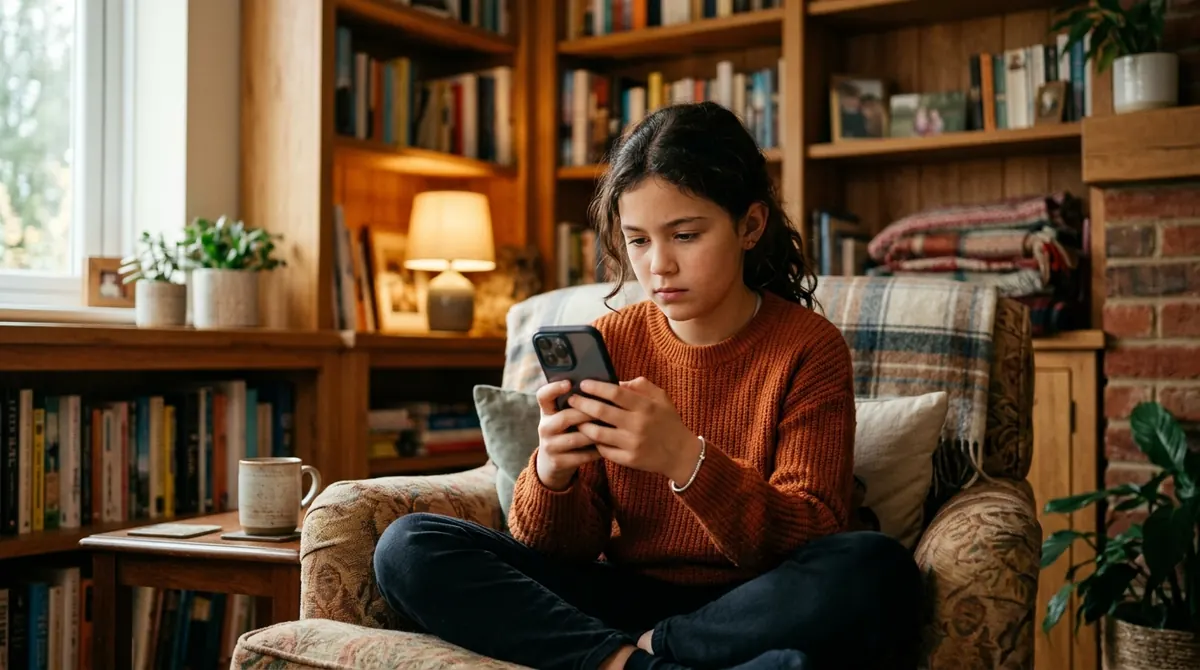
Sign #4: The Midnight Scroll
- What it is: Severe sleep disruption that is locked to device use—staying up in the dark to check messages, or experiencing nightmares immediately after screen time.
- Real-world example: You notice the glow of a screen under their door at 2 AM, followed by exhaustion the next day.
- Look for this:
- Late-night screen light in their bedroom.
- Chronic exhaustion and dread, especially on Sunday nights.
- Calls or nagging messages from peers that are rebuffed or ignored.
Try saying: “You’re on your phone at 1 AM almost every night. What are you waiting to see?”
The bully doesn’t go home anymore — so neither does your child’s anxiety.
Sign #5: Rehearsed Mockery
- What it is: Laughing at cruel memes that target others, or quoting digital harassment as if it’s normal behavior.
- Real-world example: A child who starts mocking a classmate’s post aloud, mimicking the exact style of bullying they are witnessing or experiencing.
- Look for this:
- Approval-seeking humor that punches down.
- Quoting “jokes” specifically directed at peers.
- Parroting toxic, bully-like language at the dinner table.
Try saying: “That joke hurts someone. Where did you hear it?”
Kids rehearse what bullies showed them.
Sign #6: Belongings That Arrive — or Vanish
- What it is: New items appearing with no clear funding, OR possessions that keep going “missing.” This is the classic lunch-money sign, modernized.
- Real-world example: Lost physical money, “accidentally” broken headphones, or suddenly possessing expensive in-game digital items (like Fortnite skins) they couldn’t afford.
- Look for this:
- Unexplained money gaps.
- Damaged or lost gear.
- Vague, evasive explanations about things they used to guard fiercely.
Try saying: “You’ve lost three hoodies this term. That doesn’t sound random — what’s going on?”
Bullies still take things. They just take digital things now.
Sign #7: School Avoidance + Sunday-Night Dread
- What it is: A fear of school that manifests as physical pain, often tied to receiving digital messages. These are the “I’m sick” mornings with tummy aches that miraculously disappear by 10 AM.
- Real-world example: A severe stomach ache every Sunday evening, or a panic attack that triggers right after a specific app is opened before bedtime.
- Look for this:
- Constant requests of “Can I stay home?”
- Trips to the doctor with no underlying medical cause found.
- Visible panic after a notification sound chimes.
Try saying: “You’ve felt sick every Sunday for a month. I think school is hard for you right now. Tell me.”
School refusal isn’t laziness. It’s a child protecting themselves from the place where they’re hurt.
When chronic school anxiety and peer friction begin to overwhelm a child’s nervous system, distinguishing between emotional peer distress and neurodivergent sensory fatigue is essential. For detailed strategies on decoding classroom triggers and coordinating adjustments with teachers, read our guide on Understanding The School Behavior for Kids with Autism & ADHD.
What If My Child Shows No Signs?
It is vital to understand that having no items to check off a list does not guarantee safety. Many children are exceptional at masking their pain. High achievers, in particular, may overcompensate by getting perfect grades and keeping a spotless room while suffering in silence.
Even if you see zero warning signs of bullying, you should proactively ask these three questions:
- “If you ever needed to delete an app because people were being mean, would you know how?”
- “Who is the hardest person to get along with in your group chats right now?”
- “If someone posted a fake AI picture of you, do you know that you wouldn’t be in trouble with me?”
Why Kids Don’t Tell Adults
Recall the NCES statistic: only about 20% of bullied students ever report it. Why?
- Fear of Backlash: They believe the bully will retaliate worse if adults get involved.
- Shame and Humiliation: They feel embarrassed that they are a target.
- Fear of Being Judged Weak: They want to handle it themselves to prove their maturity.
- Feeling Misunderstood: They assume adults “won’t get” how Discord or TikTok works.
- Fear of Losing Friends: They are terrified of being entirely ostracized if they speak up.
Silence is not consent — it’s strategy.
Action Plan: I See the Signs — Do This Now
If you have identified these cyberbullying signs, you need a swift, structured plan. Here is your 5-step action sequence:
| Step | Action Phase | Detailed Execution |
|---|---|---|
| 1 | Talk | Have one calm, open, non-interrogation conversation using the scripts provided above. Do not overreact; be their safe harbor. |
| 2 | Document | Create a dated log. Record times, dates, screenshots, messages, and any physical or emotional changes. |
| 3 | Screenshot-Proof | Teach your child to save evidence before they block or delete (e.g., screen-recording a disappearing Snap). |
| 4 | Involve the School | Request an in-person meeting. Use this template: “I am writing to request a meeting regarding a pattern of peer harassment impacting my child’s safety.” |
| 5 | Seek Help | Know when to bring in a child psychologist or therapist to help them process the trauma, and when to escalate to authorities. |

If prolonged peer trauma triggers severe emotional crises or sudden behavioral shutdowns, exploring proactive nervous system stabilization techniques from our guide on How to Prevent Autism and ADHD Meltdowns can help parents de-escalate acute distress safely. Once you have identified these warning signs, follow our comprehensive action plan on what to do if your child is being bullied at school to formally report the incidents, script meetings with administrators, and secure a legally binding Student Safety Plan. For broader family support frameworks, explore our curated parenting and caregiver guides.
When It’s an Emergency
Some signs require immediate, aggressive intervention. Red-line signs include any talk of self-harm, phrases like “you’d be better off without me,” or suddenly giving away prized digital or physical belongings.
If you see these, do not wait:
- Call or text the 988 Suicide & Crisis Lifeline (dial or text 988 in the US and Canada) or your local emergency mental health helpline immediately for free, 24/7 confidential support.
- Reach out to the school counselor directly first thing in the morning.
Frequently Asked Questions (FAQ)
How do I know it’s bullying and not normal teasing? Normal teasing is reciprocal, lighthearted, and stops when someone gets upset. Bullying involves a power imbalance, repetition, and an intent to cause harm or distress.
What counts as bullying in 2026? Beyond physical and verbal abuse, it now includes AI deepfakes, deliberate exclusion from digital spaces (Discord/group chats), doxxing, and anonymous harassment on apps like TikTok or Snapchat.
Should I take my child’s phone away? No. Confiscating the phone punishes the victim and validates their fear that telling you will result in losing their social lifeline. Instead, implement collaborative tech boundaries.
What if the school does nothing? If the school fails to act on documented evidence, escalate to the district superintendent, file a formal Title IX complaint (if applicable), and consider consulting a cyberbullying attorney.
How do I know if it’s happening online? Look for the hidden signs of bullying mentioned above: the reflex second-screen, digital ghosting, and intense mood shifts immediately following device notifications.
My child won’t talk to me. Now what? Do not force an interrogation. Say: “I love you, I see you are hurting, and I am ready to listen whenever you are.” Consider connecting them with a neutral third party, like an aunt, older cousin, or therapist.
Free Resource & Next Steps
Don’t wait for the silent alarm to become a siren. For hands-on journaling tools, resilience workbooks, and family support publications, explore the Med Ka Catalog.