

Quick-Action Summary: What to Do If Your Child Is Being Bullied
- Stay calm and validate your child’s feelings without assigning blame or minimizing their experience.
- Document every incident meticulously with dates, times, specific locations, witnesses, and physical/digital evidence.
- Review the school’s anti-bullying policy and the district’s student code of conduct before making contact.
- Schedule a formal, in-person meeting with the teacher or administrator using a written paper trail.
- Establish a written Student Safety Plan that includes structured supervision and a clear follow-up timeline.
Learning that your child faces hostility in the classroom, on the bus, or on the playground is gut-wrenching. Knowing what to do if your child is being bullied at school requires a rapid shift from emotional shock to systematic, logical advocacy. Bullying is not an inevitable rite of passage or standard peer conflict; it is a serious adverse childhood experience requiring structured adult intervention.
Before initiating formal institutional procedures, ensure you have accurately mapped the subtle emotional shifts detailed in our guide on the 7 hidden signs your child is being bullied, and understand why autistic and ADHD children are targeted by bullies to identify how unique neurological traits may be exploited by peers. By understanding the exact steps to take when child is bullied, you can bypass bureaucratic delays, protect your child’s emotional wellbeing, and force educational institutions to restore safety through legally binding, actionable procedures.
Phase 1: The Immediate Home Response (First 24–48 Hours)
The initial hours after a disclosure define whether a child feels protected or isolated. Parents must create a safe harbor at home before initiating external conflict with the school system.
How to React When Your Child Discloses Bullying
When children reveal harassment, their greatest fear is often that their parents will overreact, make the situation public, or somehow make the bullying worse. You must maintain a steady, calm demeanor.
| Do This | Do NOT Do This |
|---|---|
| Listen actively: Maintain eye contact, stay neutral, and let them finish speaking without interruption. | Dismiss feelings: Avoid saying “just ignore it,” “toughen up,” or “it’s normal teasing.” |
| Validate and reassure: State clearly, “I believe you, and this is completely unacceptable. It is not your fault.” | Blame the child: Never ask questions like “What did you do to provoke them?” |
| Commit to teamwork: Explain that you will make a plan together to ensure they are safe. | Promise complete secrecy: Do not promise never to tell the school; safety requires intervention. |
| Keep communications official: Channel all reports strictly through educational and legal channels. | Confront the bully’s family: Never contact the other child’s parents directly. |
Gathering Key Facts Without Interrogation
Rapid-fire questioning can trigger defensive withdrawal or trauma responses. Instead, use open-ended, trauma-informed phrasing to elicit necessary details:
- “Can you walk me through what happened from the beginning when recess started?”
- “Where were the yard-duty teachers while this was taking place?”
- “Who else was sitting at the table when they said that?”
- “How did your body feel right after that happened?”
Special Note on Cyberbullying: If the bullying occurs online (text threads, Snapchat, TikTok), do not just block the user immediately. Take immediate screenshots capturing the abusive content, the perpetrator’s profile handle, and the exact timestamp. Schools often claim cyberbullying is “outside their jurisdiction,” but if digital harassment disrupts your child’s ability to learn inside the building, the school is legally obligated to address it.
Starting the Bullying Incident Log
Never rely on memory or verbal recounts when communicating with school administration. Maintain an objective, chronological paper trail using a standardized incident log.
| Date & Time | Location | Perpetrator(s) | Witnesses | Specific Action / Statement | Impact & Evidence |
|---|---|---|---|---|---|
| Oct 12, 10:15 AM | North Stairwell | John D., Mark T. | Hall monitor | Verbal threats, deliberate shoving against locker | Torn backpack strap, bruised shoulder (photos taken) |
| Oct 14, 12:30 PM | Cafeteria | John D. | 3 Classmates | Extortion (demanded lunch money, flipped tray) | Child skipped next class, reported nausea |
Phase 2: Engaging the School System
Schools have strict legal obligations to provide a safe learning environment. However, getting them to act requires formal, documented engagement rather than informal conversations. As highlighted by StopBullying.gov, an official initiative of the U.S. Department of Health and Human Services (HHS), structured parent advocacy that leverages written policies is the single most effective way to trigger mandatory administrative intervention.
Reviewing the District’s Anti-Bullying Policy
Before making contact, locate your district’s policy document (usually under the Student Code of Conduct on the district portal). Identify:
- The statutory definition of bullying vs. peer harassment.
- The designated administrative investigator (often the Assistant Principal or Dean of Students).
- The legally mandated institutional response timeline (typically 3 to 5 business days for an initial investigation).
How to Report Bullying to School: The Official Email Template
Avoid unannounced hallway conversations or phone calls, which leave no paper trail. Use this exact template to initiate a formal administrative review:
Subject: URGENT: Formal Bullying Incident Report Regarding [Child’s Full Name] - Grade [X]
Dear [Principal/Assistant Principal Name],
I am writing to formally report an ongoing bullying and peer harassment issue involving my child, [Child’s Name], enrolled in [Grade/Homeroom].
We have documented multiple specific incidents taking place on school grounds that are severely impacting [Child’s Name]‘s physical safety and educational access. The primary student involved is [Bully’s Name].
I request an in-person meeting within the next 48 hours to discuss the district’s anti-bullying policy, initiate your formal administrative investigation, and establish an immediate Student Safety Plan. Please confirm your availability for tomorrow at [Time] or [Alternative Time].
Attached is an objective summary of dates, locations, and details for your review. I look forward to working collaboratively to resolve this safely.
Sincerely, [Your Name] [Your Phone Number]
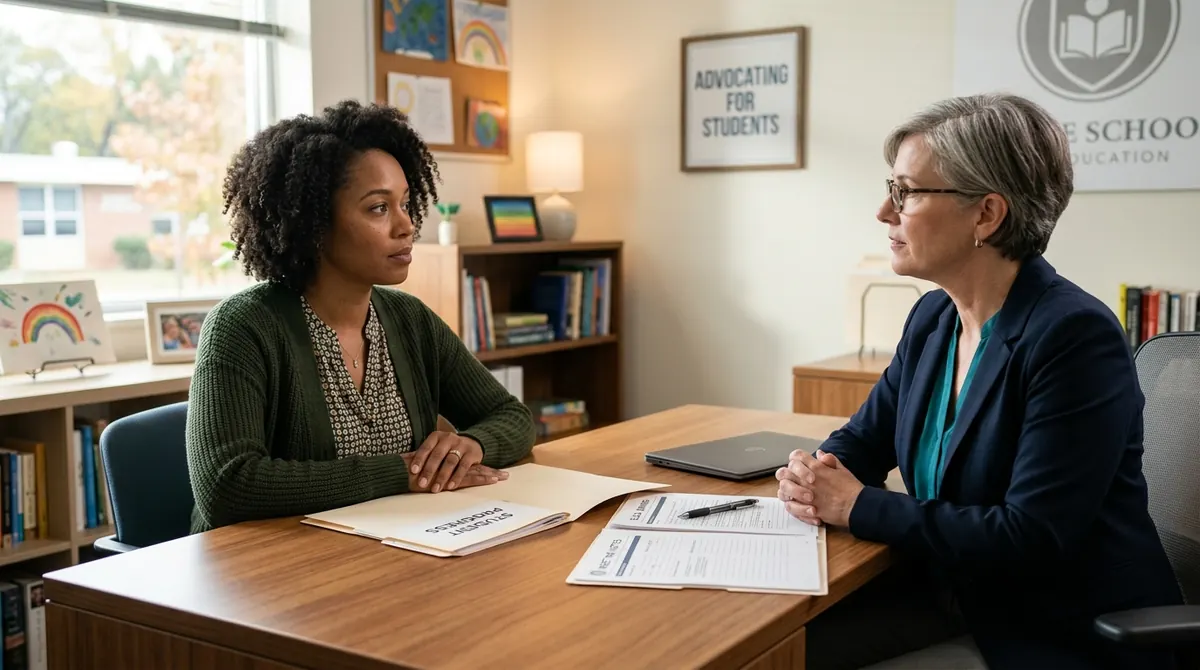
Conducting the Meeting: Scripts for Talking to Principal About Bullying
Administrators frequently attempt to de-escalate parents by minimizing the behavior. You must remain calm, objective, and unrelenting. Use these specific scripts for talking to principal about bullying when faced with common pushback:
| Administrator Pushback | Your Scripted Response |
|---|---|
| “Boys will be boys / It’s just normal middle school drama.” | “According to the incident log, this is targeted, repetitive, and involves a clear power imbalance. This meets the district’s exact definition of bullying, not peer conflict.” |
| “We can’t monitor the students every second of the day.” | “I understand staffing is difficult, which is why we need a formal Student Safety Plan specifying exactly which adult will monitor [Child’s Name] during transitions, lunch, and recess.” |
| “We will talk to the other child and sort it out.” | “Thank you. In addition to disciplinary action, what specific structural changes are being made today to ensure they are physically separated?” |
Before leaving the meeting, demand a written Student Safety Plan and set a hard calendar date to review its effectiveness in 5–7 business days.
Phase 3: Escalation Pathways (When the School Fails to Act)
If the school administration minimizes the complaints, claims lack of evidence, or fails to enforce the agreed-upon safety plan, you must escalate aggressively through institutional and regulatory channels.
The Administrative Chain of Command
Do not jump straight to the school board; you must follow the procedural ladder to prove you gave the institution a chance to fix the issue:
- Tier 1: Classroom Teacher / Guidance Counselor.
- Tier 2: Assistant Principal / Building Principal.
- Tier 3: District Superintendent / Title IX Coordinator.
- Tier 4: State Department of Education / U.S. Department of Education Office for Civil Rights (OCR).
Legal Protections and Civil Rights Thresholds
If the bullying targets specific protected traits, it is no longer just a school discipline issue; it is a federal civil rights violation.
- Title VI & Title IX: Prohibits harassment based on race, color, national origin, or sex/gender. If the school demonstrates deliberate indifference to this harassment, they risk their federal funding.
- Section 504 & IEP Protections (ADA): If your child has a disability (ADHD, Autism, sensory processing disorder, or physical impairment) and is being targeted because of it—or if the peer abuse impedes their ability to access education—the school is violating their statutory right to a Free Appropriate Public Education (FAPE). You can legally demand an emergency IEP meeting to add a dedicated paraprofessional or structured safety accommodations to their legally binding educational blueprint. For neurodivergent children navigating complex school interactions, incorporating targeted accommodation strategies from our guide on school behavior plans for kids with autism and ADHD provides proven structural safeguards.
Involving Law Enforcement
Schools will often discourage police involvement to protect their institutional reputation. Ignore this if the behavior crosses into criminal conduct. Contact local law enforcement immediately in cases of:
- Documented physical assault, battery, or bodily injury.
- Extortion, robbery, or destruction of expensive personal property.
- Stalking, felony-grade verbal threats of violence, or weapon possession.
- Creation or distribution of non-consensual sexual imagery involving minors.
Phase 4: Supporting Your Child’s Psychological Recovery
Securing the school environment is only half the battle. Your child’s nervous system will need time and structured support to heal from prolonged peer trauma.
Identifying Delayed Trauma Signals
Children rarely articulate trauma with mature vocabulary; they manifest it biologically and behaviorally. According to clinical guidance from the American Psychological Association (APA), chronic peer victimization frequently presents through somatic distress and neurovegetative symptoms, requiring empathetic behavioral pacing:
- Somatic Symptoms: Unexplained early-morning headaches, acute nausea, or chronic stomach pain right before the school bus arrives.
- Sleep Disturbances: Insomnia, night terrors, sudden bed-wetting in younger children, or refusal to sleep alone.
- School Refusal: A sudden, intense phobia of entering the school building, often accompanied by full-blown panic attacks.
If peer harassment triggers acute emotional crises or sudden behavioral shutdowns, utilizing calm de-escalation protocols from our guide on how to prevent autism and ADHD meltdowns can help parents stabilize distressing episodes safely.
Rebuilding Confidence Outside the Classroom
Bullying works by convincing a child that their entire social world rejects them. You must prove this false by diversifying their peer groups. Enroll them in activities completely disconnected from their school ecosystem:
- Individual Progression Sports: Martial arts, bouldering, or swimming build physical autonomy without the social pressure of competitive team dynamics.
- Specialized Interest Groups: Robotics, coding clubs, or local theater groups provide safe havens for neurodivergent or highly creative children.
When to Seek Professional Therapy
Do not wait for a full psychological breakdown. Engage a licensed child or adolescent therapist (LCSW, LPC, or PsyD) if your child displays persistent anxiety, marked depressive symptoms, sudden academic collapse, or any self-harm ideation. Furthermore, a clinical diagnosis of anxiety due to bullying provides you with powerful medical documentation to force the school’s hand regarding formal educational accommodations. For broader family support and developmental frameworks, explore our curated parenting and caregiver guides.
Frequently Asked Questions
Should I contact the parents of the bully? No. Direct outreach to the other child’s family almost never resolves the issue. Parents instinctively defend their children, which frequently escalates the situation into a hostile neighborhood conflict. Keep all communications strictly mediated through school administrators.
Can I keep my child home from school while the bullying is investigated? Yes, if their physical or psychological safety is at immediate risk. However, to avoid being penalized for unexcused truancy, you must email the principal explicitly stating: “I am keeping [Child’s Name] home due to an actively unsafe educational environment, pending the implementation of a functional safety plan.”
How long should a school take to investigate a bullying report? Most state laws mandate that schools initiate an investigation within 1 to 3 school days of receiving a formal report, and conclude it within 10 school days. Check your specific state’s Department of Education website for exact statutory deadlines.
What is the difference between conflict and bullying? Peer conflict is a mutual disagreement between students with equal social power; both parties usually feel remorse. Bullying requires three elements: a deliberate intent to harm, a documented imbalance of power (physical size, age, or social standing), and a repetitive pattern over time.
Helpful Resources & Next Steps
Structured documentation and consistent advocacy are your most powerful tools when dealing with educational institutions. For hands-on planning checklists, printable incident tracking templates, and classroom accommodation guides, explore Med Ka’s companion publication: The School Behavior Plan Workbook or browse our complete catalog of supportive parenting and caregiver publications.